Negatives in the Dark
Preserving the Craft of Darkroom Photography
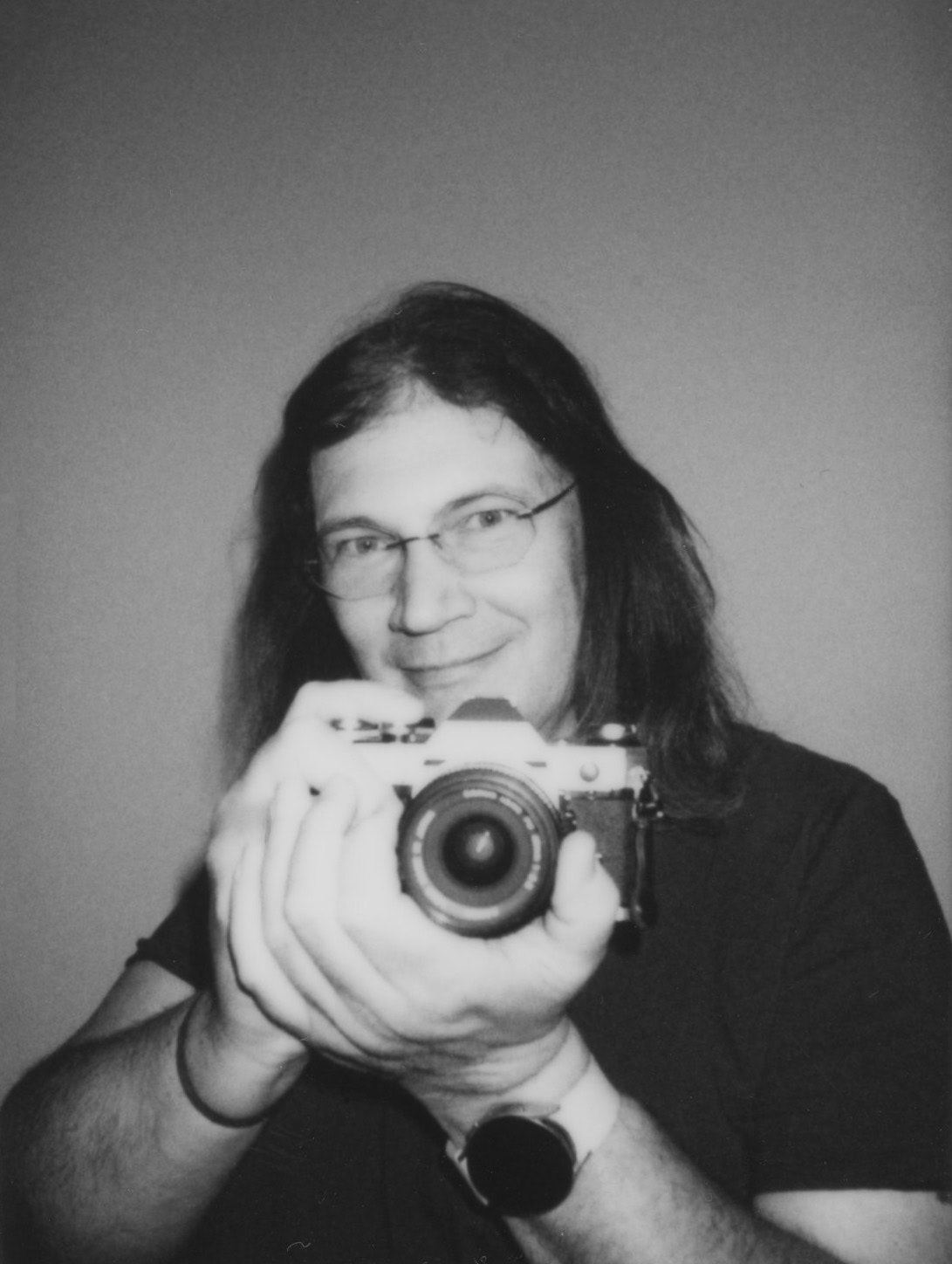
Arnold Fouts
About the Artist
My photographic practice began in the digital medium, where I first learned the fundamentals of composition, light, and visual storytelling. In 2020, I began working with film and stepped into the darkroom for the first time. The transition to analog photography introduced a very different rhythm to the process. Shooting film required greater deliberation, patience, and intention than the immediacy of digital capture.
Slowing down in this way fundamentally changed how I approach photography. Each frame became more considered, and the act of photographing evolved into a more reflective process. The tactile nature of working with film—loading reels, mixing chemistry, and watching an image slowly appear in the developer tray—deeply resonated with me.
The darkroom became a place of deeper connection with my work. Working with my hands and engaging directly with the materials and processes of photographic printing allows me to remain closely connected to the craft. The time and care required to develop negatives and produce prints are not simply steps in the workflow; they are an integral part of the artistic experience.
My photographic practice began in the digital medium, where I first learned the fundamentals of composition, light, and visual storytelling. In 2020, I began working with film and stepped into the darkroom for the first time. The transition to analog photography introduced a very different rhythm to the process. Shooting film required greater deliberation, patience, and intention than the immediacy of digital capture.
Slowing down in this way fundamentally changed how I approach photography. Each frame became more considered, and the act of photographing evolved into a more reflective process. The tactile nature of working with film—loading reels, mixing chemistry, and watching an image slowly appear in the developer tray—deeply resonated with me.
The darkroom became a place of deeper connection with my work. Working with my hands and engaging directly with the materials and processes of photographic printing allows me to remain closely connected to the craft. The time and care required to develop negatives and produce prints are not simply steps in the workflow; they are an integral part of the artistic experience.
About the Work
The photographs presented here were created during my travels and reflect moments of quiet observation across different places and histories.
Haven looks across Mirror Lake toward the Main Library at The Ohio State University, capturing a reflective view of the campus landscape. Sanctuary was photographed inside the historic Eastern State Penitentiary Museum in Philadelphia, Pennsylvania, where the architecture and atmosphere evoke a powerful sense of solitude and contemplation.
The image displayed beside Haven is Cheomseongdae in Gyeongju, South Korea—an ancient stone astronomical observatory and one of the oldest surviving observatories in East Asia.
Also included are two prints made from the same negative, photographed in South Korea. These prints demonstrate two traditional darkroom printing approaches. The print on the left was made on multigrade fiber paper, which allows the photographer to adjust contrast during the printing process through the use of filters. The print on the right was made on graded contrast paper, where the contrast is predetermined by the paper itself and cannot be altered during exposure. Presenting both prints highlights how material choices in the darkroom influence the final interpretation of an image.
The photographs presented here were created during my travels and reflect moments of quiet observation across different places and histories.
Haven looks across Mirror Lake toward the Main Library at The Ohio State University, capturing a reflective view of the campus landscape. Sanctuary was photographed inside the historic Eastern State Penitentiary Museum in Philadelphia, Pennsylvania, where the architecture and atmosphere evoke a powerful sense of solitude and contemplation.
The image displayed beside Haven is Cheomseongdae in Gyeongju, South Korea—an ancient stone astronomical observatory and one of the oldest surviving observatories in East Asia.
Also included are two prints made from the same negative, photographed in South Korea. These prints demonstrate two traditional darkroom printing approaches. The print on the left was made on multigrade fiber paper, which allows the photographer to adjust contrast during the printing process through the use of filters. The print on the right was made on graded contrast paper, where the contrast is predetermined by the paper itself and cannot be altered during exposure. Presenting both prints highlights how material choices in the darkroom influence the final interpretation of an image.